Cultural Influences Driving Game Preferences in International Mobile Casino Markets
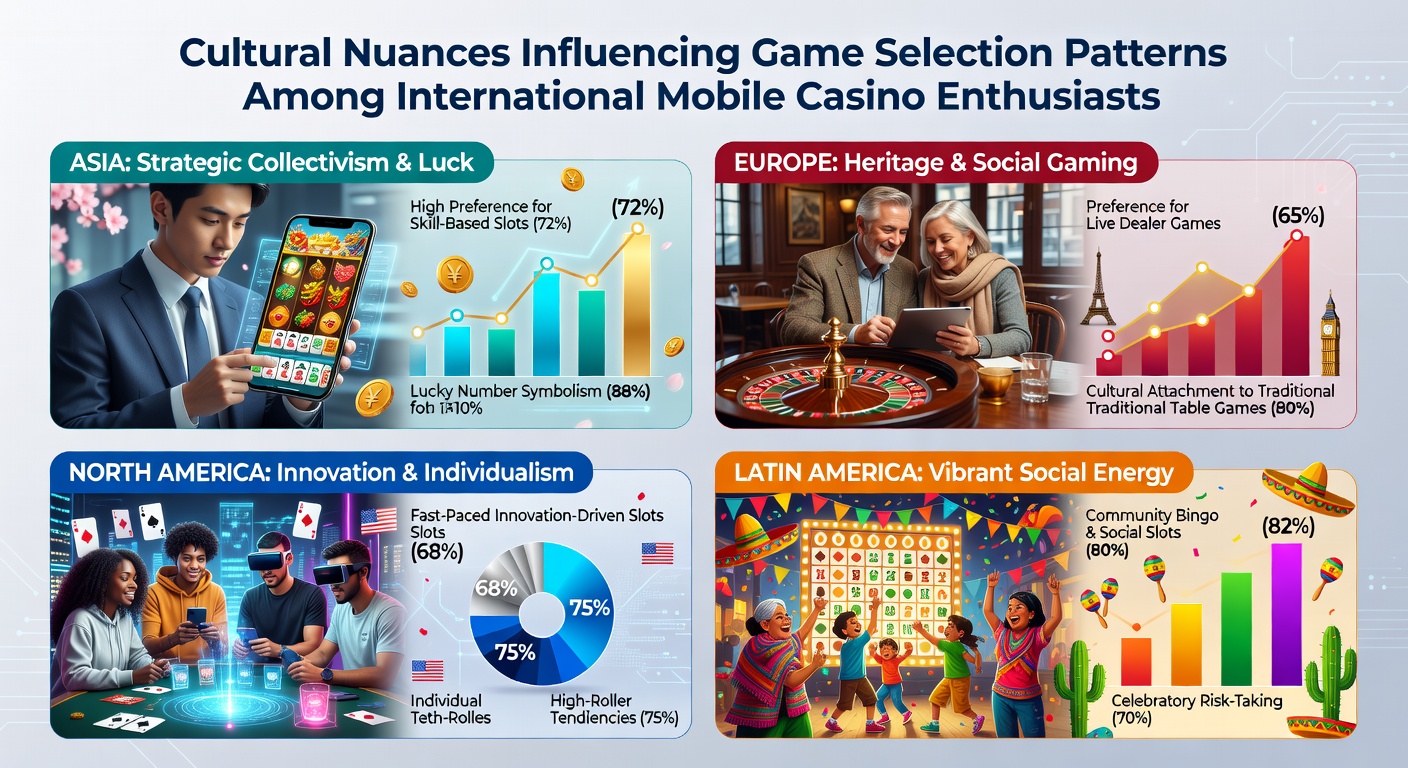
Patterns in mobile casino game selection reveal distinct regional preferences shaped by longstanding cultural values, social structures, and historical attitudes toward chance and strategy, with data from multiple jurisdictions confirming these divides rather than random variation.
Regional Preferences Rooted in Tradition
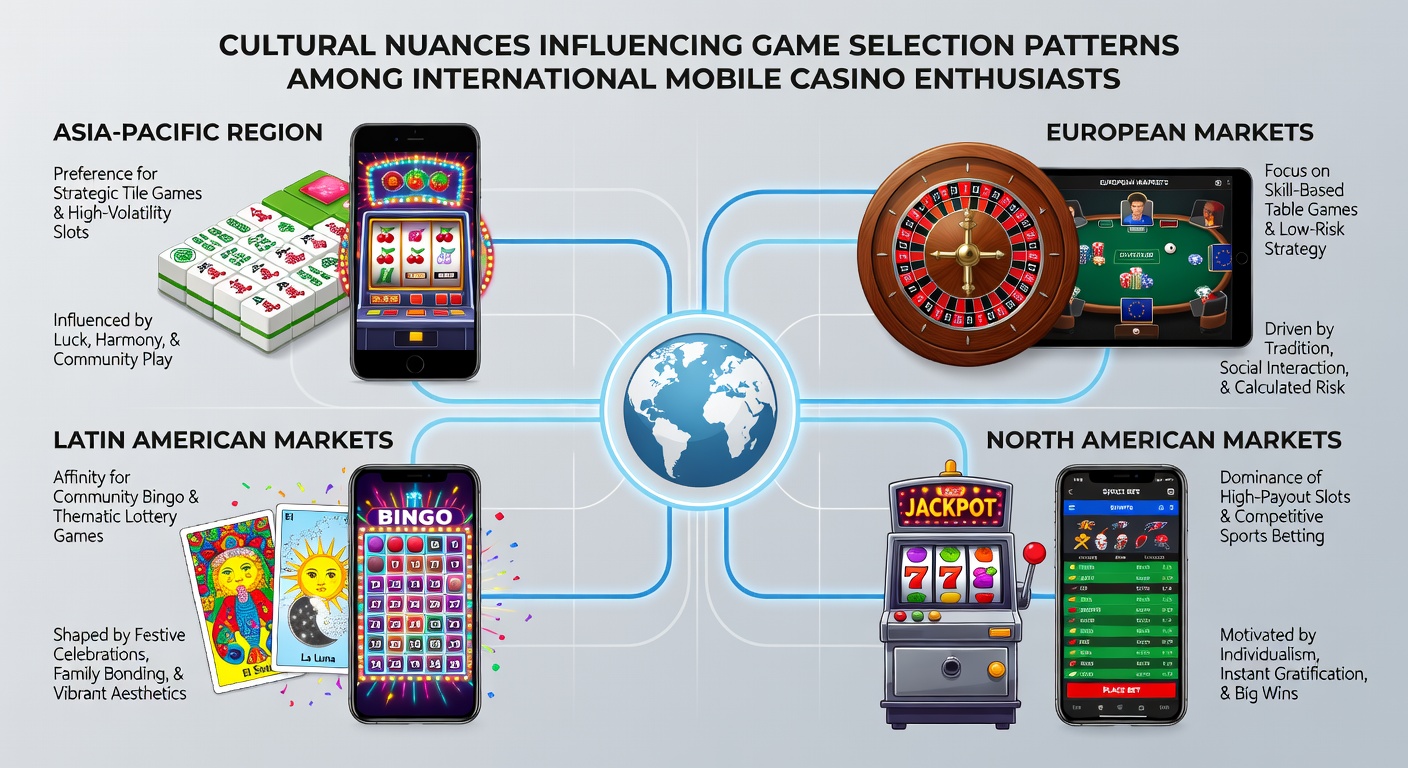
Observers tracking user behavior across platforms note that enthusiasts in East Asia often gravitate toward games blending skill elements with rapid decision cycles, such as certain variants of blackjack or mahjong-inspired slots, because Confucian-influenced societies historically emphasize discipline and calculated risk over pure luck, while data collected through 2025 shows consistent spikes in these categories during evening hours aligned with communal leisure patterns. In contrast, players from Latin American markets demonstrate stronger engagement with narrative-driven slots featuring mythological or festive themes drawn from local folklore, according to aggregated analytics shared by regional operators who report higher retention when titles incorporate symbols like Day of the Dead motifs or carnival celebrations.
European markets display their own split, where Nordic users favor minimalist interfaces and progressive jackpot structures that reward persistence, whereas Mediterranean participants lean toward live dealer formats that replicate social gathering atmospheres common in traditional card rooms. These differences persist even as mobile penetration rises uniformly worldwide, suggesting culture overrides platform convergence.
Social Dynamics and Community Expectations
Group-oriented societies in parts of Southeast Asia and the Middle East show elevated selection of multiplayer tournament modes and shared jackpot features, because these formats align with collectivist norms that prioritize communal achievement over solitary play, and industry reports from May 2026 highlight a measurable uptick in collaborative session lengths following major cultural festivals. Individualistic cultures in North America and Australia, however, record stronger traffic toward single-player progressive slots and strategy simulators, where personal control remains central to the experience without requiring social coordination.
Payment method integration further amplifies these patterns because cultural comfort with digital wallets or cryptocurrency varies sharply by region, with East Asian users adapting quickly to seamless app-based transfers tied to local fintech ecosystems while some Western European players maintain preferences for established banking rails that carry historical associations of trust and oversight.
Symbolism, Themes, and Visual Language
Game themes resonate differently based on embedded cultural symbolism, as researchers examining selection logs discover that titles referencing prosperity symbols like dragons or koi fish perform disproportionately well among Chinese-speaking communities, whereas Western audiences respond more readily to adventure narratives rooted in exploration or historical figures familiar from popular media. Visual design choices, including color palettes and animation styles, compound these effects because certain hues carry auspicious meanings in one context yet appear neutral or even off-putting in another, leading developers to deploy localized asset packs that maintain core mechanics while swapping surface elements.
Language localization extends beyond translation to include idiomatic references and humor styles that reflect everyday speech patterns, and operators who implement these adjustments report improved session depth without altering payout structures or rules.
Data Patterns Emerging in 2026
Analyses released around May 2026 by international research consortia tracking cross-border traffic indicate that cultural clustering remains stable even as new titles launch monthly, with users from collectivist backgrounds continuing to allocate larger shares of playtime to social features while those from high-individualism regions concentrate activity on competitive leaderboards and personal achievement metrics. These trends hold across age cohorts, although younger users show slightly faster adoption of hybrid formats that blend cultural elements from multiple traditions.
Regulatory frameworks in different jurisdictions indirectly reinforce these preferences by shaping available game libraries, because licensing requirements in Australia emphasize consumer protection disclosures that favor transparent mechanics, while frameworks in parts of Asia permit faster iteration on social features that align with established entertainment norms.
Conclusion
Understanding these cultural nuances allows operators and platform designers to refine offerings without imposing uniform experiences, since evidence consistently demonstrates that respecting regional value systems improves engagement metrics across borders while preserving the underlying randomness and fairness that define casino games. Continued monitoring of selection data through the remainder of 2026 and beyond will likely reveal whether globalization softens these distinctions or whether they deepen as localized content proliferates.