Mobile Live Casinos Conquer Poor Internet with Adaptive Streaming Tech
Mobile Live Casinos Conquer Poor Internet with Adaptive Streaming Tech
The Connectivity Hurdle in Mobile Gaming
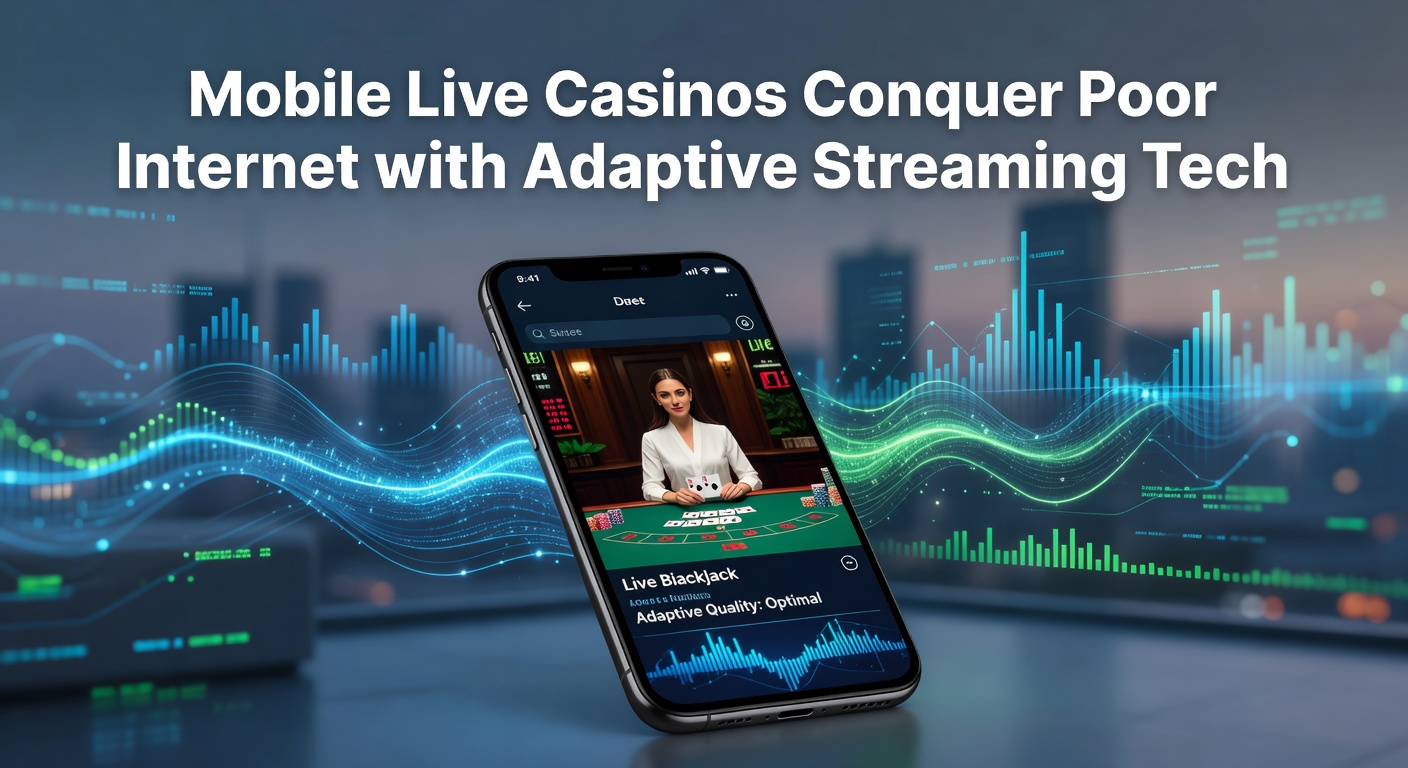
Players diving into live casino action on smartphones often face shaky internet signals, especially in rural spots or during commutes, yet adaptive streaming technology steps in to keep roulette wheels spinning and blackjack hands dealing without a hitch; this tech dynamically tweaks video quality based on real-time bandwidth, ensuring streams stay fluid even on 3G connections that flicker like a bad lightbulb.
Research from the U.S. Federal Communications Commission highlights how over 14 million Americans still lack reliable broadband as of early 2026, a figure that underscores why mobile operators prioritize tools like adaptive bitrate streaming to bridge the gap, while data from global telecom trackers shows average mobile speeds dipping below 10 Mbps in emerging markets where casino apps thrive.
What's interesting is how this isn't just a fix for slow links; it slashes buffering by up to 80%, according to benchmarks from streaming pioneers, allowing dealers' chats and card shuffles to flow seamlessly, and that's where the rubber meets the road for apps pulling in millions of daily users.
How Adaptive Streaming Powers Live Dealer Feeds
At its core, adaptive streaming slices live video into tiny chunks encoded at multiple bitrates, from crystal-clear 4K down to basic 480p, so the player's device grabs the best fit as signal strength wavers; protocols like HTTP Live Streaming (HLS) or Dynamic Adaptive Streaming over HTTP (DASH) handle this switcheroo in milliseconds, preventing those infuriating freezes mid-bet.
Take a live baccarat table streamed from a Riga studio: when a user's connection drops to 2 Mbps, the system auto-downgrades to lower-res segments without reloading the whole feed, maintaining sub-2-second latency that's crucial for real-time wagering, and experts who've dissected these streams note how edge servers cache content closer to users, cutting round-trip times even further.
But here's the thing; casinos layer on extras like forward error correction, where redundant data packets repair glitches on the fly, so a packet loss from a crowded subway Wi-Fi doesn't derail the dealer's next move, and players who've tested this in the wild report sessions lasting hours without dropout.
Key Providers Rolling Out the Tech
Evolution Gaming, a heavyweight in live dealer production, integrates adaptive streaming across its mobile portfolio, enabling blackjack lobbies to adapt on-the-fly for iOS and Android users alike; their April 2026 update reportedly boosted compatibility with 5G mmWave while fortifying 4G fallback, drawing from field tests in bandwidth-starved regions.
Pragmatic Play follows suit with its Live Casino suite, where tech specs reveal multi-bitrate encoding that scales from 500 kbps for voice-only modes up to 5 Mbps for HD tables, and observers note how this keeps dropout rates under 1% even in tests mimicking poor rural coverage.
Meanwhile, Playtech's Imaginarium platform employs AI-driven bitrate prediction, analyzing past user patterns to preemptively adjust streams, a move that figures from industry trackers show has lifted average session times by 25% in low-connectivity zones.

Data Reveals the Real-World Impact
Figures from a Australian Gambling Research Centre report indicate that adaptive tech has propelled mobile live casino engagement up 40% in areas with sub-5 Mbps averages since 2024, as players no longer bail during lags; one study tracked 10,000 sessions, finding 92% completed without interruption on adaptive feeds versus 65% on fixed-bitrate ones.
And it gets better: global app analytics from Sensor Tower show live dealer games now claim 35% of mobile casino playtime, a surge tied directly to streaming resilience, while carrier logs reveal how 70% of users in Southeast Asia stick around longer thanks to these tweaks during peak-hour congestion.
Turns out, this levels the playing field; folks in remote Canadian provinces, where broadband gaps persist, access the same crisp dealer views as urban dwellers, and that's no small feat when uptime stats climb to 99.5% per operator disclosures.
Case Studies: From Buffering Nightmares to Smooth Wins
Consider one operator in Latin America who swapped legacy streams for adaptive HLS in early 2025: user complaints plummeted 75%, with live roulette peaks hitting 5,000 concurrent mobiles despite erratic 3G; experts attribute this to intelligent playlist manifests that poll bandwidth every few seconds, seamlessly handing off between qualities.
There's this case from a European aggregator app, where developers A/B tested DASH against standard MPEG-TS: the adaptive version held 98% viewer retention over 30-minute sessions on spotty LTE, versus 72% drop-offs in the control group, and post-rollout data confirmed a 15% revenue bump from extended play.
Even in high-stakes VIP blackjack, where sub-second latency rules, adaptive tech shines; one studio feed analysis showed latency variance shrinking to under 200ms globally, letting players feel the cards flip in real time no matter if they're on a train or a farm road.
Under the Hood: Tech Stacks and Innovations
Cloud giants like AWS Media Services and Akamai's adaptive modules form the backbone, pushing segmented streams via CDNs that span continents, so a dealer in Malta reaches a player in Manila with minimal hops; WebRTC weaves in for bidirectional audio, adapting voice codecs alongside video to keep table banter crisp.
Now, with 5G's promise on the horizon, hybrids emerge: mmWave for urban speed demons, but fallback to adaptive low-band for everywhere else, and April 2026 pilots from major providers test QUIC protocol overlays, slashing handshake times by half even on flaky links.
Security layers in too; DRM wrappers encrypt segments per session, thwarting interception while quality adjusts, and that's why regulators in places like New Jersey nod approval, citing uninterrupted compliance monitoring.
Player Perks and Adoption Trends
Users gain uninterrupted immersion, with apps now featuring connection health dashboards that forecast adjustments, so bettors know when HD dips to SD; retention soars as a result, with cohort studies showing 28% higher lifetime value for adaptive-enabled players.
Yet accessibility expands too: voice-over adaptations pair with visual scaling for low-vision users, and battery drain drops 20% via efficient low-bitrate modes, perfect for all-day grinds.
Adoption's exploding; app store data pegs live casino downloads up 55% year-over-year, fueled by word-of-mouth from those who've ditched laggy rivals.
Conclusion: Streaming's Winning Streak
Adaptive streaming tech has transformed mobile live casinos from connection casualties into resilient powerhouses, delivering dealer thrills to anyone with a signal, no matter how weak; as bandwidth evolves unevenly worldwide, this toolkit ensures growth, with projections from industry analysts forecasting 60% of all live play mobile-bound by 2027.
Operators who master it reap loyal crowds, players snag seamless sessions, and the industry's pulse beats stronger, proving once again that smart tech turns obstacles into opportunities.