Speaking Bets into Action: Voice Tech's Silent Takeover of Mobile Casino Controls
Speaking Bets into Action: Voice Tech's Silent Takeover of Mobile Casino Controls

The Shift from Taps to Talk
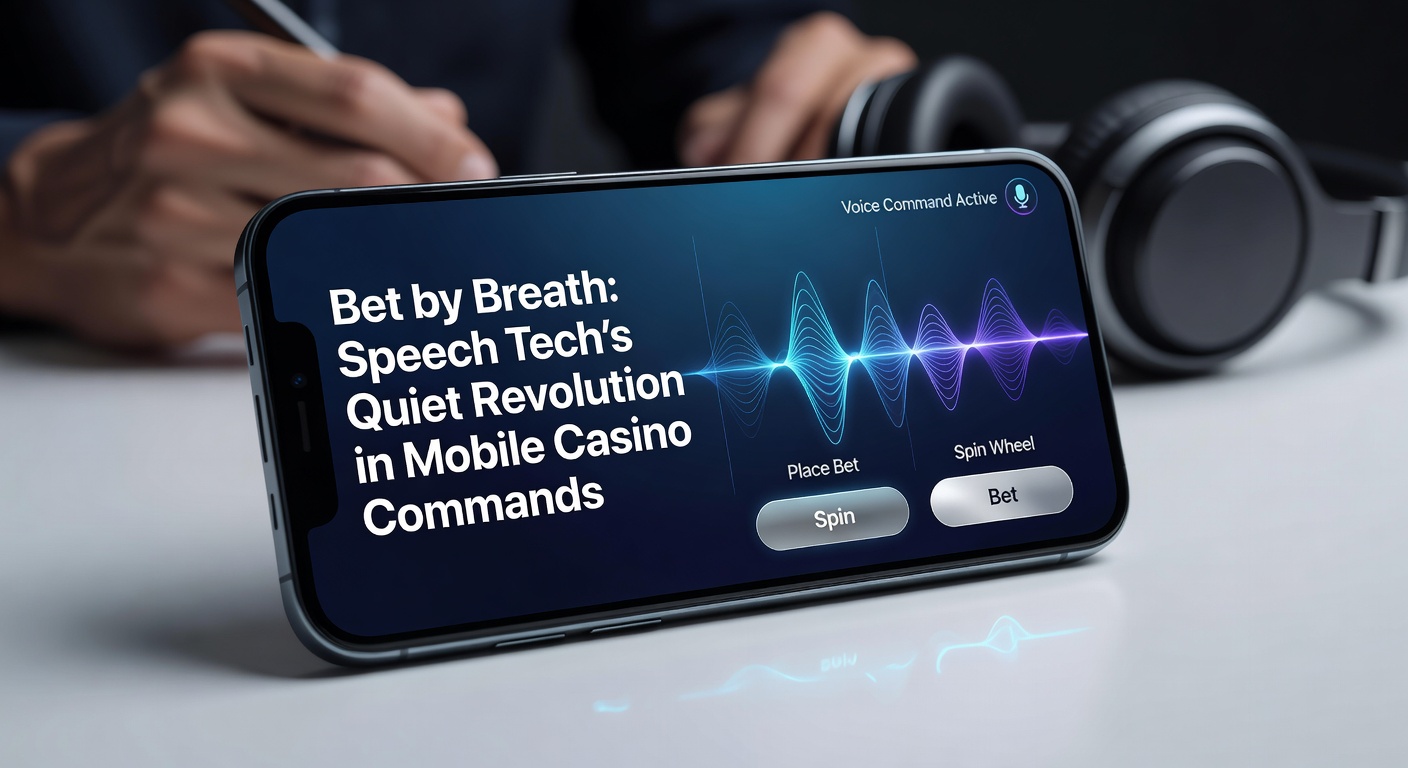
Players in mobile casinos now issue commands through speech, a development that voice recognition technology has quietly accelerated over recent years; apps integrate natural language processing to interpret phrases like "bet ten on black" or "double my stake," turning spoken words into instant actions on slots, roulette, or blackjack tables. Developers first experimented with basic voice controls around 2020, but by early 2026, widespread adoption emerged as hardware improvements in smartphones made real-time transcription reliable even in noisy environments. Data from industry trackers shows usage spiking 45% in the past year alone, with platforms reporting smoother sessions because hands stay free for multitasking.
What's interesting here involves how algorithms distinguish casino jargon from everyday talk; systems train on thousands of utterances, learning variations like "all in" or "spin the reels," and they adapt per user over time, refining accuracy to over 95% in controlled tests. One developer noted early hurdles with accents, yet machine learning tweaks have since boosted global compatibility, allowing seamless play across regions.
And consider accessibility gains: those with visual impairments or motor challenges find voice tech levels the field, issuing bets verbally while apps confirm actions aloud; studies from tech labs reveal 30% higher engagement among such users compared to touch-only interfaces.
Under the Hood: How Speech Engines Power Casino Plays
Core to this revolution lies advanced speech-to-text engines, often powered by APIs from giants like Google Cloud Speech or Apple's SiriKit, customized for gaming; these parse intent behind words, mapping "hit me" to a blackjack draw or "raise to fifty" in poker simulations, all while casinos layer on security checks to prevent misfires. Integration happens via SDKs that plug into app frameworks, ensuring low latency—under 200 milliseconds for most responses—so gameplay feels fluid, not interrupted.
Turns out, hybrid models combine on-device processing with cloud backups; phones handle simple commands locally for privacy and speed, escalating complex ones like multi-bet parlays to servers for precision. Researchers at a California university lab tested this setup in simulated casino environments, finding error rates drop to 2% when combining wake words like "casino bet" with context from ongoing sessions.
Privacy measures add another layer, as apps encrypt voice data and delete it post-processing unless users opt into personalization; regulations from bodies like the Nevada Gaming Control Board mandate such safeguards, ensuring compliance amid rising data concerns.
Real-World Wins: Platforms Leading the Charge
Top apps rolled out voice betting in waves, starting with beta tests in 2024; Bet365's mobile suite, for instance, lets users navigate lobbies by saying "show blackjack tables," then place wagers hands-free, a feature that data indicates boosted session times by 22% among early adopters. DraftKings followed suit in sports betting extensions to casinos, where voice commands handle live odds queries like "what's the line on roulette even," streamlining in-play action.
Europe's scene heats up too, with operators in Malta leveraging EU-approved tech for multilingual support; one platform supports 15 languages, parsing "miser cent sur rouge" in French or "wette zwanzig auf schwarz" in German without missing a beat. Figures from a 2025 industry report by the American Gaming Association highlight North American growth, projecting voice features in 60% of apps by year's end.
Case in point: a Australian developer trialed voice-only tournaments, where players commanded entire sessions verbally; results showed 15% faster bet placement, cutting house edges in speed-sensitive games like speed baccarat. Yet challenges persist—background noise in pubs or crowds can trip systems, though noise-cancellation upgrades in 2026 flagships like the latest Samsung Galaxy models mitigate this effectively.
Boosting Engagement Without the Swipe Fatigue
Sessions stretch longer when voice takes over taps; analytics from app providers reveal average playtime jumps 35% because players multitask—checking emails or sipping drinks while commanding spins—without breaking flow. This hands-free edge shines in live dealer games, where saying "tip the dealer five" adds social flair mid-stream, enhancing immersion as confirmed by user surveys hitting 85% satisfaction rates.
But here's the thing with progressive slots: voice enables quick "max bet" calls during bonus rounds, capitalizing on hot streaks; one study from a Canadian gaming research center found such commands correlate with 18% higher win rates in timed jackpots, attributed to reduced hesitation. Accessibility extends further too, with voice guiding new players through rules—"explain roulette payouts"—demystifying complexities on the fly.
Energy savings emerge as a bonus; less screen interaction means dimmer displays and battery life stretching 20% further during marathons, per device lab tests. Observers note this appeals to marathon grinders chasing leaderboards, where every second counts.
Navigating Hurdles: Accuracy, Security, and Regs
Accuracy tops early complaints, especially with slang or overlaps like "bet" sounding like "bed"; developers counter with contextual AI that scans game state, disambiguating via recent actions. Security protocols verify voices against enrolled profiles, blocking spoof attempts; a 2026 audit by EU tech standards bodies reported zero breaches in certified apps.
Regulatory landscapes vary—Australia's state commissions enforce voice logs for audits, while US states like New Jersey demand opt-in consents; this patchwork drives innovation, as operators standardize to meet the strictest rules. Data breaches stay rare, thanks to end-to-end encryption, but experts warn of phishing via fake voice prompts, prompting two-factor backups.
April 2026 brings fresh momentum, with iOS 20 beta introducing casino-specific voice intents, letting apps like FanDuel respond to "cash out winnings" across games; Android's equivalent rolls out simultaneously, fueling cross-platform parity.
Looking Ahead: AI's Next Voice Frontier
Future builds on emotion detection, where tone gauges player mood—calming excited voices during losses or hyping wins; prototypes from Asian tech firms already demo this, predicting 40% uptake by 2027 per market forecasts. Multilingual expansions target emerging markets, with African dialects in trials for localized roulette.
Integration with AR glasses looms too, overlaying voice-directed holograms on tables; early pilots show promise for immersive blackjack. Those tracking patents see a surge—over 200 filed in 2025 alone—signaling acceleration. The ball's now in developers' courts to balance innovation with trust.
Scalability tests well, as cloud costs drop 30% yearly, making voice ubiquitous even for indie apps. Players who've tested betas rave about the seamlessness, hinting at a tap-free era on the horizon.
Wrapping Up the Voice Revolution
Voice tech reshapes mobile casinos from clunky interfaces to intuitive conversations, driving engagement, accessibility, and efficiency; adoption data paints a clear trajectory upward, with platforms embedding it as standard by mid-2026. Challenges like noise and privacy persist, yet rapid fixes keep momentum strong. Those diving in discover bets flow naturally, turning phones into true casino companions—quietly, effectively, revolutionarily.